
24aa
Print Articles,

Crafting The Future

“We cherish the traditions of brewing history, while being creatively innovative about the future of it.”

Kevin Somerville

Brewmaster/Partner


BEER. A word that is simplistic in its pronunciation, but yet a word that elicits copious amounts of stereotypical connotations when spoken.

For most, it is a cheap and inexpensive alcoholic treat that appeals to university students and blue collar/working-class aficionados infatuated by the notion of sporting events, video games and social events devoid of any sort of hors d’oeuvres.

You can blame the marketing agenda of beer advertisements for this sort of hazy-eyed perspective.

In reality, beer is rarely discussed in conversation as a beverage that can compare with the alluring seductiveness of wine or spirits.

Beer is, to put it simply, a beverage marketed to mass amounts of people rather than to a specific demographic. This general understanding of what a beer is typically supposed to represent (anti-elitist) only helps to undermine the vastness of what it is actually capable of.

Niagara Oast House Brewers is looking to alter this perception of what a beer has incorrectly been defined as.

Having just recently opened their doors in November of 2012, the diminutive microbrewery (located in a beautifully renovated, century-old red barn on 2017 Niagara Stone Road in Niagara-On-The-Lake) is investing a great amount of time and effort into the composition of flavourful craft beers that are produced in innovative and quality-driven ways.

Typically, a craft beer is formulated by a brewer that is small, independent and traditional. In other words, it has no affiliations with any major chain of brewery.

Niagara Oast House Brewers ownership consists of three partners, Mike Berlis (Manager of Finance), Cian MacNeill (Marketing Manager) and Kevin Somerville (Brewmaster).

All three men have extensive knowledge and experience within the wine and beer industries. Mike and Cian are highly-educated/certified sommeliers (Cian is  also a winemaker) while Kevin was trained for brewing in Germany and Chicago, and also helped found and write the curriculum for Niagara College’s Brewmaster and Brewery Operations Management program. He continues to teach for it, as well.

With this amount of educated intelligence circulating amongst the three of them, it’s easy to understand why the company takes great strides to incorporate quality-driven methods of production.

According to Somerville, “Our goal as a company is to create top of the line craft beers that simultaneously push the limits. Craft beer culture is exploding throughout North America at the present moment, and we wish to bring that sensibility here to Niagara. We brew in small batches, and use ingredients locally sourced by Niagara Farmers who work with us to produce the freshest ingredients possible. We’re attempting to embrace and to be highly representative of the Niagara region’s famous motto of ‘farm to table.”

Adds MacNeill, “We want to do everything the Niagara way. Our desire is to respect the roots of the region.”

The microbrewery initially launched with two beers in November. A Belgian-style Saison, which is the first in the Farmhouse Ale collection of bottle-conditioned beers (historically, Farmhouse Ales were produced during the cooler months so that they could be released during the summer work season on the farm), and a Barnraiser Country Ale, a hoppy and very citrusy beer that is aromatically strong.

In April, the group has plans to release the Biere de Garde. A member of the Farmhouse Ale family, it is darker than the Saison with more malt character stepping forward.

Niagara Oast House Brewers is dedicated to maintaining an aura of fresh and contemporary, and promises to consistently have something new and innovative lurking on the horizon. Thus the beer options will constantly be in a state of transition in an attempt to offer certain types of beer during particular points of the season.

With that being said, though, it still seems that opening any sort of business within the heart of wine country would be a stressful endeavour. But the company appears to be at ease with their positioning deep within the historical heart of wine country.

The fundamental reason being that the group believes they’re not in direct competition with the wineries, but rather are there to help compliment and exhibit how multifarious (in regards to agriculture) the Niagara Region truly is.

According to Somerville, “We are aiming to add further dimension to the Niagara-On-The-Lake community, and to provide the traveller lodging in the area with another option to experience. As well, we also wish to create a more diverse food and beverage industry in the region.”

At the present moment, the microbrewery currently offers tours, tastings, retail sales and event space for social outings.

In regards to the notion of culinary, Niagara Oast House Brewers will soon incorporate the use of local chefs to help prepare and pair food with particular beers.

Though the company is influenced by the winery model, they feel they provide an alternative experience.

“We may base our existing structure on that of the winery,” says MacNeill, “but we feel that we articulate a different sort of vibe. Our initiative is to provide an experience for our visitors that is both fun and upbeat. We wish to create an energetic environment for them to be a part of.”

As noted prior, they have also just recently formed a partnership with local farmers to supply the brewery with hops for their use (though, they do wish that more hops were grown since they believe the Niagara Region is a perfect climate for it), and for sourcing other key ingredients from nearby suppliers.

The importance of engaging with the local agriculture is of utmost importance to the microbrewery because it provides for them a label of genuine authenticity. To utilize elements from the surrounding area also helps to promote the perception that the region is brimming with unbridled possibilities in regards to cultivation.

Somerville notes, “The Niagara region is blessed with such a bountiful amount of components to play with that it would be a shame not to take advantage of what’s in our very own backyard.”

To note that the company is driven by a passionate thirst for success would be an understatement.

Says MacNeill, “Niagara Oast House Breweries will elevate the status of craft beer in Ontario through creating consistent top-quality artisan beers. We’ll be good environmental stewards and support our local communities through the creations of strategic partnerships.”

A company in its infancy, free to explore all the possibilities this area has to offer is a key ingredient in the invigorating pleasure of discovering something new.

37aa
Film Analysis,

The Postmodern Landscape of ‘Total Recall’

Total Recall (1990)

Directed by Paul Verhoeven

Starring: Arnold Schwarzenegger, Sharon Stone and Michael Ironside


Synopsis:


Doug Quaid (Arnold Schwarzenegger) is a construction worker constantly haunted by dreams and memories of Mars. Against the best wishes of his wife, Quaid goes to Rekall, a company that implants artificial memories, so he can “remember” visiting the red planet. However, things do not go as planned, and Quaid is soon forced to fight for his life.


Analysis:


I have watched Total Recall many times over the years and still, to this day, struggle with whether or not the story is real or merely a fabrication of the mind. There are many hints and clues scattered throughout that seem to provide discernible answers but as soon as one believes they have it figured out, their sleuthing prowess is undermined by the narrative (and they are forced to rethink their decision).

In actuality, there is no definitive answer provided which, in all likelihood, is the entire point of the film. The lack of discerning of whether or not this is real or, in fact, merely a dream is simply a commentary about society and their inability to exist within the mindset of a fractured reality.

Total Recall is a film that has come to represent the notion of Postmodernism. Along with films such as Blade Runner (1982) and The Matrix (1999), these films strive to represent the nature of a fragmented identity. In addition, a Postmodern film grapples with issues such as reality, the image, media saturation and the loss of the natural.

In a basic sense, Postmodernism reflects the idea that meaning is no longer contained/explained within the confines of a single text. There are now many separate and conflicting ideas that may account for answers. Postmodernism is not about structure but rather about a confetti of thought. In terms of Total Recall, the film cannot easily be interpreted as it is an attempt to reflect an ever-changing existence.

Total Recall is based on a short story by Phillip K. Dick entitled “We Can Remember It For You Wholesale’. In typical Postmodern fashion, Dick’s stories typically focus on the fragile nature of what is “real” and its relation to identity. His stories often become surreal fantasies as his main characters slowly discover that their everyday world is actually a constructed illusion.

For instance, in Blade Runner (a film based on a Philip K. Dick story), Harrison Ford begins to doubt whether or not he is an actual human or, in fact, a replicant. In Total Recall, Arnold begins to wonder whether or not he is Doug Quaid (a construction worker) or Houser (a secret agent).

Conflicting duality is a key component of Dick’s stories, and his themes have helped to pave the way for postmodern theorists such as Jean Baudrillard and Frederic Jameson in their attempts to comprehend and dictate the vastness of this theory.

Though, for as much as the film strives to instruct, it is still an impressive piece of action entertainment. The film is relentless in its depiction of violence and gore, and outraged many censors in 1990 (it seems fairly tame, nowadays). It is fun-filled entertainment that is directed with flair from famed Dutch director Paul Verhoeven (who also directed 1987’s Robocop- a film very concerned with the nature of reality, technology and the deconstruction of the body). In a sense, this film is sort of a companion piece to Robocop. Both deal with many similar themes which may be why Verhoeven decided to helm this production.

In many ways, Total Recall is a structured analysis concerned with society’s inability to cope with the present-day reality of an ever-changing identity. We are but wandering souls who exist in a fractured culture of fear and paranoia. What is real? Who am I? These are but some of the questions that the world struggles with on a day to day basis, and which are greatly realized in this action extravaganza. This film is a rare example of a thinking man’s movie existing within mainstream culture.


a99z
Film Analysis, Music, Music Analysis,

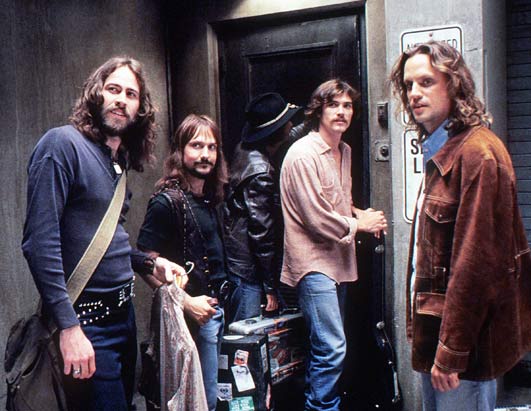
The Social Importance of Music (As Depicted In ‘Almost Famous’)


An unknown author once remarked that “music is what feelings sound like”. This is a very abstract but telling truth about music. Music and lyrics can literally be identified as a pathway into the soul of the musician. Many may say that music is capable of freeing the soul, and as a result has the ability to captivate us all through its majestic melodies. So, in more ways than one, it is not about listening to music but rather it is about the embrace and feeling of it.


It is crucial to understand the basic concepts behind the importance of music because in Almost Famous, the music is the true star of the film. Yes, the performances are stellar and critical to the overall impact of this filmic gem, but it is the music incorporated within which fuels and drives it.


In fact, the greatest scene in the film (and my favourite scene of all time), comes at a time when there is a large amount of dissension within the band Stillwater. While on tour, many embittered truths have been revealed between the band members. Hostile and angry, the band refuses to speak to one another. During a bus trip to their next concert location, the band, and other members of the tour, sit solemnly silent in their own little worlds. As this scene plays out, Elton John’s ‘Tiny Dancer’ drifts nomadically throughout the cabin of the bus. After a few tense but silent moments, one of the members of the band begins to sing along with the lyrics. Soon after, another member joins in. Eventually the entire bus becomes a harmonizing choir. Without any spoken verbal dialogue, these people are reconnected through the power and essence of music itself. It is one of the most telling and poignant moments in film history and indicative of the role music can play in our lives.


Almost Famous is more than just a musically fuelled spectacle, however. The film has heart and challenges itself to tackle themes crucial to the understanding of these characters. It deals with the loss of innocence, loneliness, acceptance and the idea of identity. It is a coming of age story which strives to delve deep into the inner emotions of the characters presented to us, the viewer.


Issues of Identity


Ex-Nirvana frontman Kurt Cobain once said: “Wanting to be someone else is a waste of the person you are”. Strong and prophetic words from an artist who strived to remain true to himself even in the face of fame and success


As was the case in Dazed and Confused (1993), this film is about a lost generation attempting to come to grips with who they truly are. In most coming of age stories (and through the pains of adolescence), there is a tremendous struggle to define who one truly is. As we follow the exploits of fifteen year old William Miller (who is attempting to write an article for Rolling Stone magazine), the viewer is permitted a glimpse into the struggles and upheavals that this character must deal with. He does not possess a stable identity and struggles, as a result, to discover the essence of his true self. For example, in one of the most engaging sequences of the film, he fabricates the truth about his age to Kate Hudson’s character, ‘Penny Lane’. She asks him how old he is and he responds with: “eighteen”. She says: “me too”. He then states that he is seventeen. She again responds with: “me too”. He then corrects himself once again and notes that he is sixteen and she immediately responds with “me too”. He then ends this irreverent dialogue sequence with: “actually I’m fifteen”. This scene is quite amusing, but it is a telling statement about the instability of these two characters identities.


To further complicate matters for William is that in order to secure this writing assignment, he must lie to Rolling Stone about his age. Adding to his deception, he even goes as far as to employ a fake voice to trick them into accepting him as someone he is not; a college graduate.


The role of ‘Penny Lane’ is played with an innocent charm by Hudson, but her character may be the most complicated of them all. The fact that she conceals her age from William is very important, but it is in her refusal to provide her real name that is extremely troublesome. The fact that she is a mere sixteen years old indicates that she is presently battling through the same trials and tribulations of William. She may believe that she has a strong understanding of herself but she is sadly mistaken. She is pretending to be someone she is not (the fact that she uses a Beatles song as her name further indicates her lack of defining character). Her entire appearance is a lie but she conceals these misrepresentations with a falsified persona.


In this regard, the characters of William and Penny are crucial to one another. It is through Penny that William comes to terms with who he is while simultaneously Penny discovers through William that her initial perception of herself has been an outright lie. It is only when she accepts who she truly is, that she is able to divulge her true name to William. To sum it up, both of these characters find themselves through the imperfections of the other.


In fact, every key character of this film goes through some sort of identification struggle. During a scene where a potential plane crash may occur, every member on the plane expresses some sort of truth about him/herself that they have kept hidden away. As well, throughout most of the film there is a great conflict between the lead singer Jeff Bebe (Jason Lee) and lead guitarist Russell Hammond (Billy Crudup), and the issues of whom they truly are and who they truly appear to be. However, by the end of the film, the characters who have struggled to define themselves have come to some sort of understanding of who they are. They have learned from one another (many have actually learned from William who is a true catalyst for their growth) and have accepted it. They are no longer characterized by any sort of superficiality but rather by a defined reality.


Director Cameron Crowe delicately touches on these issues that are important to the growth of the human being. He never condemns nor romanticizes the characters in the film and refuses to tamper with their vulnerability as individuals struggling to understand


a13
Music, Music Analysis,

The Objectified Woman (Music Edition)


There is no denying the fact that the world is marked by imbalance. Gender roles have been strictly codified by patriarchal society and have remained relatively unchanged for centuries. In 1975, Laura Mulvey made note of this in her article “Visual Pleasure and Narrative Cinema”. Though, she was merely focusing onHollywoodnarrative film, her words could be stretched to include every facet of the woman and her struggles for equality/subjectivity.


According to Mulvey: “…the male gaze projects its phantasy on to the female figure which is styled accordingly….women are simultaneously looked at and displayed, with their appearance coded for strong visual and erotic impact so that they can be said to connote to-be-looked-at-ness”. As a result, women hold the look of the male, play to it and thus signify male desire.


This definition of gender roles is clearly existent within the world of narrative cinema. However, it is presently being challenged by both male and female artists deeming to take a stand against these stereotypical and dangerous coding signifiers. Can the same be said for women in the music industry?


Women as Sexual Objects   


Sex sells. There is no denying this fact. It is a tremendous marketing tool and fuels the insatiable cravings of a sex-obsessed society. Women are sexually objectified to maintain the strong patriarchal values that the world has been built on since the beginning of time. The Feminist movement made vast improvements during the 1960s because change was an acceptable and respected practice during this era. However, for as much as the 1960s accomplished, the Patriarchal establishment still reigns supreme. In essence, it is extremely difficult to challenge a system that has been set in stone for centuries.


There are many female singers present in the music industry. Many have great voices and maintain a strong subjectivity throughout their songs or performances. Artists such as Whitney Huston, Aretha Franklin and Reba McEntire are rarely criticized for their raunchy lyrics or fashions. The sole factor being is that they do not need to be vulgar or raunchy. They have been around for quite sometime and are respected on the merit of their talents alone. They have proven themselves. It is the younger generation of singers that are the most troublesome.


The Younger Generation of Singers


There have been many young artists that have started out as legitimate singers. Vowing to make it on the strength of their voice rather then the size of their body, artists begin their career with a dream. However, record companies place a lot of trust, time and money into an artist and if that particular singer’s record sales begin to dwindle, changes must ensue.


The most crucial aspect of this singer is no longer her voice. It has now become about her body and how she can sexualize herself to appeal to a large male audience (in hopes of obtaining fans that may not have been attracted to her music in the first place). If one would reminisce for a brief moment. Think about the artists that started off as innocent, wholesome singers and then abruptly transitioned into highly sexualized objects. Britney Spears, Christina Aguilera, Jessica Simpson, Mariah Carey (breast implants and all), Jewel, Fergie, Avril Lavigne and so on.


These artists will fabricate and state that they altered their look because they had personally changed inside. How naïve do these singers believe society is? There is no record company in this world (who has invested millions into this particular singer) that would allow one of its artists to alter their image for their own benefit. There is too much at risk. That is why there are executives sitting around a boardroom table for hours on end contemplating how they can better market their performer to the world. So when Christina Aguilera mentions that she became “dirrty” as a result of her maturation, one can just imagine the Public Relations group for Christina silently padding themselves on the back.


Music, Sex and Teenagers


The world is a highly sexually charged entity and sex is a key component for young adults. There is no denying this fact.  Thus, it is appropriate to discuss the nature of sexuality with teenagers at an early age. However, it is when these spin doctors of the music industry begin to exploit sexuality for the purpose of record sales that it begins to become a problem.


These artists are role models to young females around the world. They respect them and want to emulate their every move. They are so enthralled by their idol that they begin to dress like them in hopes of being like them (unaware of the potential risks). Males, on the other hand, lustfully desire these singers. They place their gaze upon them and begin to objectify them. The fact that males sexualize these singers will only increase the chances of these males sexualizing these young females.


Patriarchal society is a dominant structure and will more then likely stand the test of time. There will be movements and pleas for change but the roles will more then likely never be reversed. In light of this belief, the longer women continue to be objectified and classified as sexual beings, the longer it will take to rid the world of these sexual images threatening the innocence of today’s youth.

am2
Film Reviews,

Heat (1995)


Synopsis:


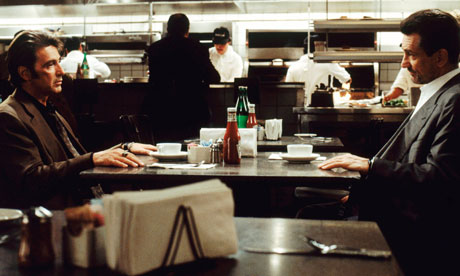
Al Pacino portrays Vincent Hanna, a cop obsessed with bringing down master criminal Neil McCauley (Robert De Niro) and his tight-knit crew.


Thematic Analysis and Review:


In 1995, Michael Mann achieved something no other film director had been capable of accomplishing; Al Pacino and Robert De Niro were finally set to work with one another in the same film*. Renowned for their tireless work ethic, their obsessive preparation and their legacy of skilled performances, the thought of Pacino and De Niro in the same film was a dream come true.


But there needed to be a perfect film** for them to expose their raw acting talent to one another. In Michael Mann’s ‘Heat’, the two of them are presented a blank canvas to operate upon, and as a result, deliver highly effective but yet (on the surface) vastly different performances***.


‘Heat’, in a basic sense, is simply about cops and robbers, which is not all that original of an idea. Especially since Hollywood has tended to exploit the genre to such a degree that it has become extremely difficult to discern one crime film from another. But ‘Heat’ is different. Superficially, the film is about an obsessed and tightly wound cop, Vincent Hanna (Al Pacino), in hot pursuit of a crew who are led by a controlled and emotionally restrained individual, Neil McCauley (Robert De Niro). However, in retrospect, the film is about so much more then simply “good” guys and “bad” guys. It’s about obsession and loneliness. It’s about respect and admiration. It’s about the human condition and how frail it truly can be.


Ian Nathan, writer for Empire Magazine****, may sum it up best when discussing the idea of thematic depth within ‘Heat’: “Michael Mann manages to encompass layers of character and theme, as well as action and extraordinary cinematic technique, to create a coruscating picture of the causes, consequences and human costs of crime in a fragmented world (2001).


To put it simply, Vincent Hanna is a man possessed in his pursuit of Neil McCauley. So much so that it accelerates the deconstruction of his personal relationship he has with his wife (Justine), as they can no longer communicate on a one-to-one level. Neil, on the other hand, lives a structured existence with no attachments to anything (not even furniture). If need be, he is set to flee at a moments notice. As he so “poignantly” points out, “Don’t let yourself get attached to anything you are not willing to walk out on in 30 seconds flat if you feel the heat around the corner”. Both of these men live by rules and procedures. They are the best at what they do because they discipline themselves to do so. It is only in personal communication with others that they are left unaccustomed, lost for words.


Nothing sums this up more than when Vincent has been called to the scene of a homicide. A prostitute has been murdered and Vincent seems at ease with it (as if he is used to it). It is only when the mother of the murdered girl runs onto the scene that Vincent is left speechless. He does not know how to verbally console the mother, nor does he know how to assist her in any other way. He simply stares at her, lost in her cries of agony.


T put it simply; both Vincent and Neil are emotionally fragile individuals. One is a cop and one is a criminal, but yet they share a common bond in their lack of understanding of how to connect with someone on a personal and emotional level. That is why their first meeting during the coffee shop sequence is so crucial to the understanding of these men as emotionally aloof human beings. According to Ian Nathan, this scene is the foundation for the whole film: “On the surface, it is just a superficial conversation-two guys shooting the breeze-but actually it’s the delicate dance of two disparate souls finding a connection” (2001).


The Loneliness of Los Angeles


‘Heat’ is a visually stunning film in the fact that it takes place within the overpopulated Los Angeles, but yet is shot in such a way as to depict it as a lost and lonely land *****. Mann and cinematographer Dante Spinotti present a unique vision of the City of Angels: “Filmed across 65 separate LA locations (and no soundstages), this is an urban milieu almost space-age in its abstract beauty, but emotionally desolate, a blank canvass against which the dispossessed act out their desperate dramas. Nothing anchors people-all the houses are stunningly angular, magnificent architectural vacuums free of personality” (Nathan, 2001).
This is no easy feat to accomplish and definitely requires the directing chops of a highly skilled artist such as Mann. To create a sense of anguish and isolation in a land so immense is a true indicator of the talent of this auteur.


‘Heat’ is a highly ambitious (perhaps overambitious?) film which focuses on the plights of eighteen separate individuals******, but yet still manages to create a sense of surreal silence. There is a tremendous amount of dialogue in the film, and it is sparked by extreme violence during some instances, but it never becomes a film one can comfortably connect with*******. All of the key combatants in this extravaganza are emotionally cut off from one another, and as a result, the film becomes more about the quest for acceptance and understanding rather than about the physical confrontation between Hanna and McCauley.


Anthony Kiedis, lead singer of the rock band Red Hot Chili Peppers, may have said it best about the loneliness one may feel in the town that isLos Angeles. In the song ‘Under the Bridge’, Anthony makes a heartfelt reflection about the idea of being alone: “Sometimes I feel like I don’t have a partner, Sometimes I feel like my only friend, Is the city I live in, The City of Angels, Lonely as I am together we cry”. Is there any better way to sum up the emotional detachment felt by the characters within this masterpiece of a film?


* Technically, Pacino and De Niro were in ‘The Godfather Part II’ together but never shared any screen time.


** ‘Heat’ is not a perfect film, but amazing nonetheless.


*** In actuality, there are many subliminal similarities between the two characters.


****The best film magazine in the world!


***** The loneliness of Los Angeles truly helps to reinforce the thematic elements of the film.


****** Very much reminds me of a Robert Altman film.


*******Which is not a bad thing in this instance.

al1
Film Reviews,

Mad Max


Synopsis:


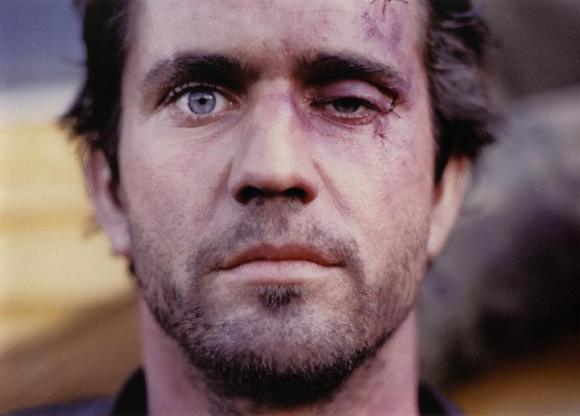
Max (Mel Gibson) is a cop dedicated to keeping the roads of a desolate lookingAustraliasafe in the near future. But soon after a fellow police officer is severely injured, Max decides to retire from the force. During his hiatus, his wife and child are attacked by a gang of marauding bikers causing Max to seek bitter vengeance against them.


Review:


SPOILERS are included in this piece


‘Mad Max’ is a post-apocalyptic action film with elements of horror, sci-fi and melodrama. But at its core, ‘Mad Max’ is a Western. During the early stages of Australian Cinema, Australia struggled to define a cultural identity for themselves through the language and visuals of their films. As it is with most national cinemas, many filmmakers import ideas, themes and structures from the most dominant filmmaking country in the world, theUnited States of America. One of the most prevalent genres/structures in, not only film, but in literature has always been the Western. The Western, at its most basic level, can be used to symbolically express emotional truths about everyday society. As a result, the conventions and basic narrative structure of the Western have morphed into many types of films ranging from James Mangold’s ‘Copland’ (1997) to David Cronenberg’s ‘A History of Violence’ (2005). The Western has many simple truths and focuses on issues such as family, loyalty, adversity and heroism. So, one cannot truly blame George Miller for incorporating many elements of the Western into ‘Mad Max’. Every nation does it.


It is a very difficult task for national cinemas to define themselves (through their films) when striving to eliminate the imposing influence of American entertainment. American films have always set the standards for modern day storytelling, and have become extremely successful as a result. So in response, what other nations tend to do is to adopt the structure of the American film, and then deconstruct its conventions by using their own themes and symbols. This is definitely the case in regards to ‘Mad Max’. It is an action film fused with a Western, but still manages to create a solid Australian identity anyways.


Here is my Western take on the film. It is a story focused on the idea of a lawless land ruled by lawless people (Simplicity at its best). Multitudes of men ride into town on their motor bikes (horses), and proceed to terrorize it. The police, on the other hand, are powerless to do anything about it. That is until Max (the sheriff) decides to take a stand. It is not out of loyalty to the force or the land, but rather it is a vengeful journey for Max, who seeks retribution for the destruction of his family*. He may be alone in his battle, but his isolation allows for him to bring a sense of HIS own law to the land*.


Australian film and the Western, for that matter, have always been built on one necessary contradicting theme, Wilderness versus Civilization. The motorcycle maniacs enter the civilized city from the wilderness of the land, and then systematically deconstruct the structure that has been set in place. They are anti-establishment and anti-authority, and as a result, carnage and mayhem are enacted with playful exuberance. The wilderness is typically defined as an area that symbolizes masculinity in the Western. There is a kill or be killed mentality that exists throughout it. As a result, the civilized ones are unsure of how to deal with the wanderers from the land, and thus fail.


Max is a member of the civilized world. Yes, he does dress in black leather (which gains him points for masculinity), but he is unequipped to match the unpredictable rawness presented to him by these psychopathic marauders. After quitting the force, he further shies away from any form of masculine trait by becoming a family man. He buys a dog, expresses emotions to his wife (he was unable to before), and journeys with his kin in the family automobile. His mode of dress changes as well (he wears light colors which identifies his transition into a feminized male), which further works to strip him of his title as ideal male. As a result of these symbolic transitions, he is unable to protect his family in their time of need (when they are viciously murdered by the infiltrating bandits). It is only when he has lost everything that he begins to regain a sense of his manhood. He retrieves his black leather garb, obtains a powerful, 600 horsepower beast of a machine (car), and heads out after the bikers. It is at this point that he leaves the civilized world behind and dares to confront the untamed and unfamiliar wilderness landscape. He is expressionless (in other words, emotionless) and determined to kill these men in their own land. To win, he must become what he is not. He feels no pity or any remorse, especially when he handcuffs one of the bikers to a car leaking gas. Max is a new man with a new identity. He has adapted to the harsh landscape and, as a result, emerges victorious.


Australian Cinema is, in a large way, most concerned about the representation of masculinity in their films. It is an important thematic element to them as it goes to resemble the fortitude, strength and ruggedness of the Australian male. The fact that Max drives off into the wilderness at the end of the film only works to further solidify this point. Max is forever changed and he cannot return to what he was. In two sequels that followed, Max is a lonely wanderer, one with the wilderness. His body becomes beaten and abused but his survival instincts have increased. He has endured because he has adapted to the ways of the land.


‘Mad Max’ is a very low budget film but for its lack of money, the film makes up for it in terms of raw energy and mind-blowing stunts (especially for 1979). Mel Gibson was an unknown at this time, and his Australian accent is prevalent as ever. In retrospect, it is actually a shame that Mel Gibson became such a star in North America (Bear with me here). The fact that audiences will immediately recognize him undermines the overall strength of the film (in my mind). We know that he will succeed….it’s Mel Gibson. Back in 1979, however, audiences didn’t know what to expect, which made this film an enjoyable thrill without preconceived notions of any kind. With this being said, the film still continues to hold its own, and remains one of the most successful and important films in Australian film history.


* As noted prior, the idea of family is crucial to the mythology of the Western. In regards to ‘Mad Max’, other than Max’s family, there are no other families present in the film-the family structure has been destroyed in the future.


**Reminds me of Fred Zinnemann’s 1952 classic, ‘High Noon’, starring Gary Cooper.

ac1
Film Reviews,

Dead Calm (The Deconstruction of Gender in the Australian Action Film)


Synopsis:


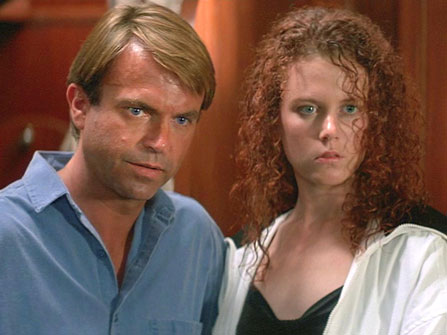
After the tragic death of their infant son, John (Sam Neill) and Rae (Nicole Kidman) decide to embark on a sea vacation to help them cope with their loss. However, after three weeks into their journey, they come across a seemingly deserted sail boat. As they study it from afar, they suddenly notice a man aggressively rowing towards them in a dinghy. Hughie (Billy Zane) comes aboard in a panic and declares that everyone on board that ship has died from food poisoning, and that he is the only survivor. John, in disbelief, decides to search the boat himself, and in an instant, their journey becomes a nightmare in more ways then one.


Analysis:


SPOILERS are included in this piece.


‘Dead Calm’ is a simple film. Its story structure largely focuses on the exploits of three people set adrift-both physically and emotionally-in the Great Barrier Reef (off the coast of Australia). The setting is defined by an extremely vast and spacious landscape, but yet the thematic elements prevalent in the film are of claustrophobia and loneliness. Director Phillip Noyce is able to create a foreboding sense of dread throughout most of the film by incorporating many tight framing shots (especially when he frames Rae’s face) and by staging many scenes in small enclosed areas.


As previously mentioned, ‘Dead Calm’ is a very lonely film. Other than the three characters, this film is devoid of any other human element. And even then, there are very few scenes in which the audience witnesses the three characters interacting with one another on screen. Of course, there are scenes between Rae and Hughie, but for the most part, their isolation from one another highlights how truly cut off these characters are from society and themselves.


Adding to these feelings of isolation and loneliness is, perhaps, the most hauntingly written score ever penned for a feature film. The music is eerily chilling, and creates such a sense of trepidation within the audience that at times the film is overly uncomfortable to watch. Graeme Revell, in charge of the original music for the film, establishes such a sense of unease that it provides the film with an added element of depth. As a result, the overall emotional and psychological impact of the film is heightened.


Australian action cinema* has always concerned itself with depictions of the masculine male. Masculinity is crucial to these particular types of films, and the representation of it is largely enhanced by the male’s assimilation into the wilderness of the Australian backlands. In most Australian action films, there is usually an ongoing tension separating the elements of wilderness and civilization. Men are typically associated with the wilderness while women are usually affiliated with civilization.


In ‘Dead Calm’, the wilderness of the outback is substituted with the limitless boundaries of the sea. In regards to civilization, it remains a foreign, unwelcomed entity as a result of the lawlessness typically associated with the unpredictable nature of water. For the first forty five minutes of the film, typical gender roles are reinforced. John, who is skeptical of Hughie’s story, decides to take on the role of active, participating male and search the other boat himself (leaving Rae alone). While on the other hand, Rae is defined as an inactive contributor. She is still greatly traumatized by her child’s death, and thus acts as caregiver who provides Hughie with drinking water when he arrives on board. When John visits the ship, he understands that the people on Hughie’s boat have not died as a result of food poisoning but rather have been murdered. In a desperate attempt to save Rae, John attempts to return to her on the boat. However, it is too late. Hughie realizes that John knows the truth and attempts to take control of the ship. Rae tries to fight Hughie off but he is too strong for her, and she is knocked unconscious. Hughie turns the boat around and leaves John behind.


It is at this time that the typical gender roles are forced to reverse. Rae must now learn to become an active participant if she is to have any chance of saving her husband. John, on the other hand, has now become an inactive member in the progression of the main storyline because of his isolation from the action. So, as a result of this key plot point, Rae’s character begins to change. She begins to grow stronger and more confident in her abilities. She learns how to load the gun, take control of the boat and defeat Hughie. In the beginning of the film, she was defined as a frail, weakened woman (unable to cope with the loss of her son), but now she has assimilated herself into the role of courageous leader (she is propelling the narrative forward). Rae has absconded with the character typically associated with the male protagonist (her name in itself is highly representative of the masculine traits associated with this individual). Her transition as a character is clearly indicated through Nicole Kidman’s excellent, strong-willed performance.


In perhaps the most telling scene, Rae is able to find and save John from imminent death. In fact, when she does discover and rescue John, she utters the words, “I found you”. Yes, it was her who found him. This woman has conquered the harsh landscape and saved the day. She has successfully subverted all of the masculine ideals Australian action cinema has typically been associated with**.


However, during the making of this film, many studio executives felt that audience members may be confused as to the ambiguous ending of Hughie***. Did he die? Where was he if he did not perish? The studio did not want these questions to linger as debate, so they forced a Hollywood-style ending on the film. Thus, Hughie is not killed by Rae. He returns and proceeds to attack her. She is defenseless and it now becomes John’s job to save her. In one telling instant, everything this film has worked for (the subversion of masculinity) is discarded and the normal gender roles (typical of film) are reinforced. It once again becomes a male versus male battle with the female incapable of action.


In the end, however, this film still remains a wonderful thriller. It is beautifully shot and the acting embraces an unforced naturalness to it. In basic terms, the film is a true classic that leaves one with an undeniable mark afterwards. ‘Dead Calm’ stays with you.


^^Of note, there are many instances where Hughie is associated with the colors of the red, white and blue. To say this Australian film is connoting many negative accusations about America is a monumental understatement.


^^In Tom O’Regan’s book, Australian National Cinema, he provides an idea as to why America is regularly identified as the personification of evil in many foreign film nations (and, on occasions, in American films, as well): “Part of Hollywood’s very popularity turns on its capacity to show American evil through hyperbolic representations of its own social, cultural and political dysfunctionality. And this is a temptation to any national cinema to itself produce American villains as Phil Noyce did in ‘Dead Calm’” (P.283). I’m not sure if this necessarily explains it, but at least it makes a valiant effort at attempting to justify it.


*Action Cinema in general.

** This is a very different type of Australian film. It dares to undermine conventional thematic elements typically associated with Australian national cinema, and save for the ending, is proud of its subversive ways.


***There is great uncertainty in whether or not Hughie is actually dead

a91
Film Analysis,

The Teen Film: Sex, Lies, and The Breakfast Club


I desperately want to believe in the teen film as a valid interpretation of reality. That what I see for an hour and a half is not falsified in any way, but is a real, honest depiction of how it truly was to be young. I truly do. But unfortunately, the ideas touched on in teen films are as fabricated as the idea that being cool in high school truly meant anything.


When I watch a teen film, I am flabbergasted at the unrealistic portraits constantly depicted within the narrative. I mean, I have never been to an epic house party like the ones I have seen in films like ‘American Pie’ and ‘Can’t Hardly Wait’, or to a prom/high school social where the kids suddenly break into an impromptu choreographed dance session like in ‘She’s All That’. Being a teenager is the most crucial stage of one’s life. It’s where we learn and adapt into who we will eventually become as an adult. We are literally coming-of-age because we are dealing with pertinent issues for the first time. Subjects such as acceptance, alienation, delinquency, rebellion, sex, gender, and nostalgia are of great importance to us, and thus are continuously embraced by the teen film.


But the way they are approached is troublesome. In ‘I Love You, Beth Cooper’, a high school nerd, Denis, embarrasses himself during his valedictorian speech after he confesses his love for (you guessed it) Beth Cooper, the hottest and most popular girl at school. After confronting him about this after the graduation ceremony, he invites her to his party. She ends up showing up (at first as a joke), but through his unwavering desire for her happiness, she learns more about herself and becomes humbled by his words. Just like in real life!


Ah, Hollywood, realism is not your forte*.


I understand that most teenagers’ personas are merely illusions intent on masking the realities of who they truly are becoming (which is a constant struggle), but the reality of the situation is that one rarely identifies their true selves out of fear of persecution and ridicule from peers.


High school is melodrama. We are identified as embodying particular traits, and if we waver from our personality quirks, we are sometimes confronted and ostracized- deemed as some sort of traitor to the reality of who our friends THINK we are as individuals (even though we are still struggling to discover ourselves). This time of our life is capable of inflicting serious damage upon our maturing psyches. Our identities are shaped as a result of our experiences, because high school is the sculptor and we are the clay. We are the result of its touch.


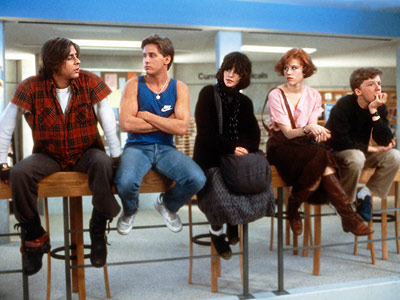
‘The Breakfast Club’, though flawed as a result of stereotyping, is probably the most realistic portrait of teenagers**. The film perfectly identifies the clique nature that is high school. You wouldn’t have to look any further than your lunch cafeteria to identify the reality of this issue.


From my own personal experience, every day I went to eat lunch at my local educational institution, I would sit at the same table, and with the same group of friends. I would look around and spot the jocks sitting at their section of the cafeteria. To my right, I would see the yearbook committee at their usual spot. I would look ahead and see the ‘cool’ people section of the dining area. Then I would look to my left and see the ‘nerds’ (I’d define myself as something, but remember, I was still attempting to find myself ).


I remember the one day that I went over and sat with the sports crowd. I didn’t think anything of it until the next day when I went to return to my usual seat, and was confronted by some of my friends as to why I turned my back on them. Was it because I was too ‘cool’ now? Ah, the ridiculousness of high school.


Whether we believe it or not, we were all a part of some sort of clique. We wouldn’t be caught dead associating with other, ‘less-fortunate’ members of our high school for a large portion of time (we remained loyal to the members of our particular groups). So when Hollywood constantly depicts the most amazing guy or girl falling for one of the ‘geeks’, it unfortunately grounds the film into the reality that it is still a fictional piece of entertainment. Fear of ridicule will always curb these valiant gestures, no matter how honest they are. The quarterback will always date the cheerleader, and the ‘geek’ will always date the ‘dork’. That’s just the way it is. There can be no cross pollination because high school is defined by the preconceived notion that ‘as it always has been, it must always be like’.


*Life is defined by choice. The choices we made during this time period have now shaped us into the individuals we are today. And here I used to think that high school was just a waste of time.


**For all of Hollywood’s honest intentions, they still depict a falsified reality (no matter how fantastic and wonderful the events seem to be). When I say the most realistic portrait, I am simply referring to the movies defined as ‘teen films’. There are plenty of other movies designed to deal with teen angst on a much more serious level (like ‘Adventureland’, ‘Elephant’, Thumbsucker’), but I am simply referring to the teen films that are advertised as light-hearted and fun (Usually found within the factory of John Hughes-‘Sixteen Candles’, ‘Pretty in Pink’, ‘Ferris Bueller’s Day Off’).