00000000000000000000000000000000000000000000000000000000000A
Blog, Pop Culture, Slider 3,

Why I Write (Into My Own Mind)

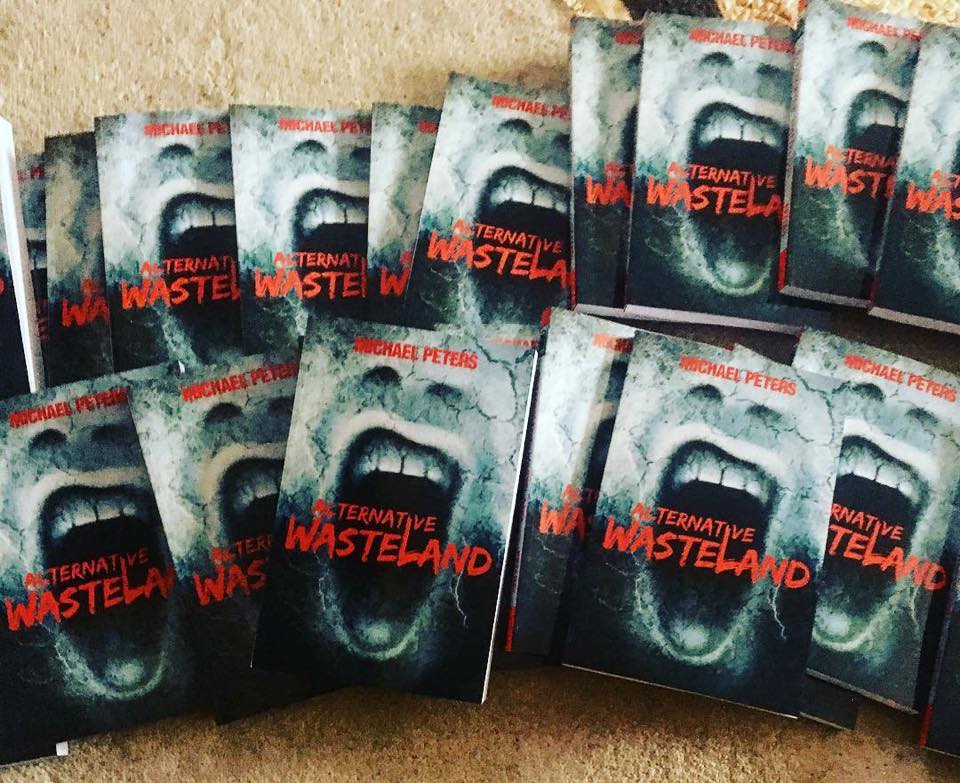
Alternative Wasteland was released in 2018, and I couldn’t have asked for a better response from readers. The books have been selling at a steady rate, and have inspired me to immediately start work on a new novel.

Alternative Wasteland dealt with many subjects within the genre of the suspense/psychological thriller (with horror elements incorporated along the way). Now, as a result of a couple of people inquiring why I choose this genre to dictate the chaos of my imaginative thoughts, I’ve decided to write a quick response.

I’ve always been intrigued with the darker elements this world has to offer. Now, I don’t mean I relish evil and destruction and chaos, but I do find the nature of these subject matters intriguing to explore from a psychological standpoint.

My stories may be dark in a superficial sort of way but I use the genre as a means to study the nature of the mind and to delve further into the thematic heart of a story (usually through the thoughts and actions of my flawed characters). In a lot of ways, my “thriller” stories are merely metaphors used to analyze deeper issues that concern and affect me. There is always more than meets the eye when it comes to my tales (well, I hope the reader can see that).

When my stories study the nature of fear, I am using it to both entertain and to explore the nature of what frightens us on a day-to-day basis. Many of the thoughts and fears from the characters within the stories are my own thoughts and fears. My daily anxieties about life and what it may hold for me. In other words, my stories don’t set out to be fear-inducing purposely…it just happens to be the genre that  allows me to express myself in the most straightforward sort of way.

The nature of one’s fight against the corrupting forces of this world is something every individual can relate to. (Good vs. Evil has been an element struggled with since the beginning of time.)

I’ve always been interested in the way the mind works. The way if can lift us up and the way it can pull us down…the power of it and, as I have said on numerous occasions, sometimes our greatest enemy. If one looks into many of my stories in Alternative Wasteland, I’m hoping they will be able to comprehend what I am truly trying to convey.

I also leave a few questions unanswered in my writing. I don’t do this to confound the reader but rather to let them explore the possibilities of certain outcomes themselves. Life isn’t always about receiving definitive answers. Things go unsolved, things go unanswered. Secrets and mysteries exist all around us. I believe in the power of the imagination, and I enjoy when others use it to its fullest capabilities.

Novels by Stephen King, Dean Koontz and Nick Cutter (just to name a few) have influenced my writing in a profound way, and have been better teachers of the writing craft than anything I ever learned in school (I hate to admit that and I apologize to all of my English teachers). Because in this modern-day, the rules of writing seem slippery, at best. Heck, Cormac McCarthy hates using punctuation because he believes it dirties the page (this even includes quotation marks for dialogue passages).

But I’ve also been influenced by The Hardy Boy books I read countless times as a child (in fact, one of the story titles in Alternative Wasteland is a flat-out homage to a Hardy Boy book), and movies and television shows viewed throughout my life. It’s amazing what stays with you as you get older, and somehow 20 years later comes to make an appearance in one of my stories.

I write the way I want to write because it makes me happy doing so. I understand that I won’t please everyone, but if I tried to do that then I would never write anything at all. Everyone will have their opinions, and I’m fine with that.

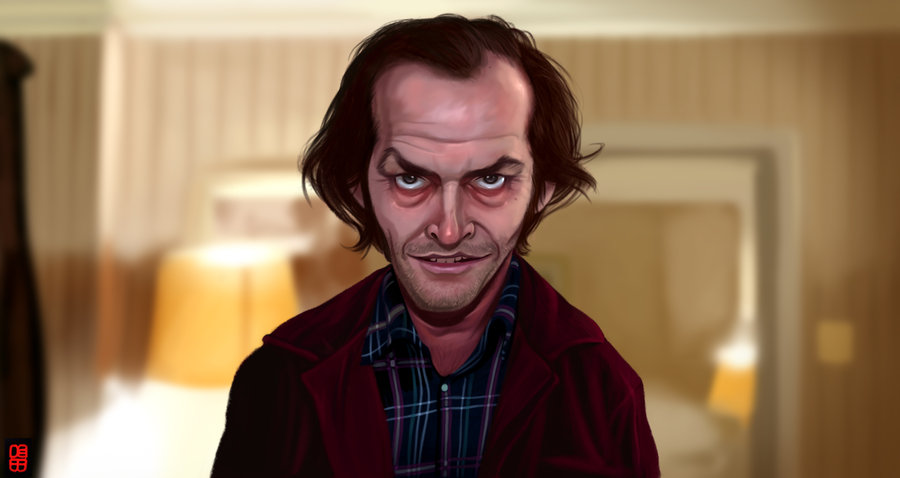
But in the end, it’s what I was put on this planet to do, and I will continue to do it until I can’t…or  if the story of Jack Torrance inspires me just…a…little…too…much…

Thank you to everyone for their support throughout the years, and I hope I can continue to entertain you for years to come!


The mind of a writer is a fascinating and frightening place to travel to, at times. I enjoy it, immensely.
 

a99j
Music, Music Reviews,

Chris Cornell – Live Concert Review

Date: April 20, 2011

City: Toronto, ON

Venue: Queen Elizabeth Theatre

Rating:  4.5/5


It’s highly surreal when one comes face-to-face with their past. I had one such encounter late Wednesday night.  As a child of the 90s, I have always held tight to the belief that the music existent during your teenage years will always remain an important aspect of your life. As you transition into adulthood, the music of the era becomes your own personal soundtrack. It comes to define you. As it stands, nothing connects to a moment quite like music.

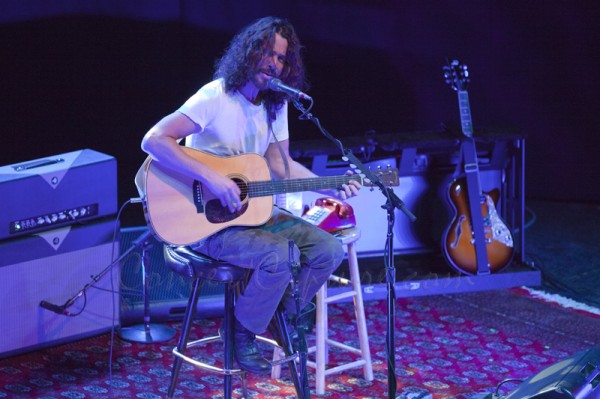
As a solo Chris Cornell walked out onto stage to wild and feverish applause, I became instantly struck with the realization that I was remaining perfectly silent. In no way was this meant as a form of disrespect, but rather it was a sign that my thoughts were overcoming me. One of the voices that helped to define my youth was now standing just 50 feet away. From here on out, I knew this night was going to be special.

Stricken with a fever that caused him to cancel his previous concert the night before, Cornell courageously battled his body to present the sold out crowd with a (mostly) acoustic show that encompassed his entire career as a musician.

Playing 25 songs over the course of two hours, Cornell, whose live vocals truly astounded me, passionately belted out songs with emphatic intensity. Though not as personally intimate as I initially expected (his sickness might have had something to do with it), it was still exhilarating to watch as he incorporated some rarely performed tracks like “Seasons” and “Like Suicide” into his setlist.

For the rest of the show, Cornell transitioned from his days in Audioslave (“Be Yourself”, “I Am the Highway”“Like a Stone”), Soundgarden (“Black Hole Sun”, “Fell on Black Days”, “Mind Riot”), Temple of the Dog (“Call Me a Dog”, “Hunger Strike”, Say Hello 2 Heaven”), and his solo career. He also took time to cover Bruce Springsteen’s “State Trooper”, Pink Floyd’s “Comfortably Numb” (he briefly transitioned into this song during his cover of Mother Love Bone’s “Man of Golden Words”), and then poignantly ended the night with his beautiful rendition of John Lennon’s “Imagine”.

To say that he is musically diverse would be a grave understatement.

But musical creativity aside, the one aspect that truly stood out Wednesday night was his commanding presence as a performer. Simply sitting on a stool with a guitar in hand, Cornell hypnotically connected with his audience through sheer emotional fortitude. Captivated by every vocal note and guitar chord, the audience revelled with tranquil delight as Cornell mesmerized them song after song.

Though, the crowd would instantaneously be transformed into passionately rejoicing cheerleaders whenever Cornell would highlight key moments of his musical past. In fact, each time he would hit one of his trademark high notes, the crowd would whoop and exclaim with exaggerated jubilation (except for the gentleman sitting next to me who could barely keep his eyes open as a result of his intense preoccupation with 4/20).

At the commencement of the show, one of these moments of exuberant appreciation caused Cornell to express, “I can’t live up to this applause, so I may as well leave now”. How wrong he was.

a3333
Music Reviews,

The Go! Team- Live Concert Review

Date: April 10, 2011

City: Toronto, ON

Venue: The Opera House

Rating: 4.5/5


Never in my concert attending history have I ever witnessed a show containing such joyful exuberance as the one I witnessed Sunday night. Bouncing and gyrating around as if they were children in the midst of a sugar rush, The Go! Team energetically blasted through seventeen songs with dynamic and sonic precision. For a band that was meant to be jet lagged (this was the first stop on their North American Tour), it wasn’t readily apparent.

It was definitely a much needed boost to an evening that was, at first, bordering on audience indifference. Prior to the band’s arrival, the crowd appeared to be a restless bunch. Not really buying into what the opening acts were selling, the spectators were simply listless observers for the first little bit. But that all changed when Team took the stage. With a whirlwind of ferocious velocity, the band opened up with the highly energetic “T.O.R.N.A.D.O.”, and immediately won the crowd over.

Playing nine songs off their latest record, the band also performed such past hits as “Huddle Formation”, “Flashlight Fight” and “The Power is On” (perhaps the best sounding song of the evening) which further adjusted the crowd’s demeanours. When they proceeded to introduce the older songs, the audience cried out with jubilant enthusiasm, and proceeded to dance with passionate delight.

Possibly adding to their excitement was an environment that contained unlimited musical instrumentation.  The Opera House is not a large venue by any means, but the stage still contained two side-by-side drum sets, numerous styles of guitars (including a banjo), a xylophone, a keyboard, a Jamaican steel drum, and even a typewriter that was put to interesting use.

By exhibiting their musical creativity, the sextet made it apparent that they were committed to entertaining by any means necessary. In fact, the moments in between songs were as interesting as the songs themselves. During some of the interludes, the band would have to alter their physical positioning onstage with other members and change up their instruments to best fit their particular musical abilities. For instance, guitarist Sam Dook would deviate his time between bass, banjo, drums and tambourine, while keyboardist Kaori Tsuchida would transition from vocals to tambourine to bass and electric guitar. It was actually quite intriguing to watch them manoeuvre amongst the stage and around one another as if it were a game of touch football.

Without slighting any of the other members (they were all passionate performers), the true attention grabber of the night was definitely lead vocalist Ninja. Flavoured with a raw musical talent that radiated power, sexiness and charisma, her very presence on stage hypnotically transcended the audience. Though, whether she was performing scissor kicks, jumping jacks or skipping over the wire of her microphone (she executed all of these feats during the show), she was always mindful never to overshadow the rest of the band. Her performance was an exhilarating centre-piece but it was always in keeping with what was important for the show. This is the true mark of a lead singer.

As impressed as I always have been with The Go! Team’s albums, their live performance far exceeded my expectations, and allowed me to appreciate them on an entirely new level.

A93
Music Reviews,

Graham Wright- Shirts vs. Skins

Album: Shirts vs. Skins

Label: File Under: Music

Rating: 3.5/5


Graham Wright’s Shirts vs. Skins is power-pop at its most casual. Driven by an effortless, free-flowing vibe, Wright’s debut LP (In 2008, he released his first EP entitled The Lakes of Alberta) is a curiosity-piece reveling in simplistic bliss.

As is the case with most side projects (Wright is the keyboardist in Tokyo Police Club), the sound and style differ greatly from the indie rock aesthetics of TPC. Here, Wright embraces a quirkiness buoyed by (adolescent) self-reflective lyricism and folk-infused poppiness.

Bordering a very thin line between annoyance and intrigue, Shirts vs. Skins focuses on sweet, sugary ensconced mini-ballads that proudly embrace a dopey, yet endearing, sentimentality (No better exemplified than on “Keys to the Kingdom”).

Heavens Just For Moviemakers” and “Soviet Race” are jovially eccentric tracks that rely heavily on catchy pop hooks that are shameless in their ability to superficially satisfy.

But superficiality has its limits, and though most of the tracks are light-hearted, honest and momentarily gratifying, its candy-coated structure tends to wear off quite quickly.

In the end, Shirts vs. Skins is ultimately undone by a lack of meaningful substance. Though it is grounded by a sincere innocence, it’s nonetheless an album that is undermined by sophomoric pop expressions of the heart.

a94
Music Reviews,

The Head and the Heart- (Self-Titled)


Album: The Head and the Heart

Label: Sub Pop

Rating: 3.5/5


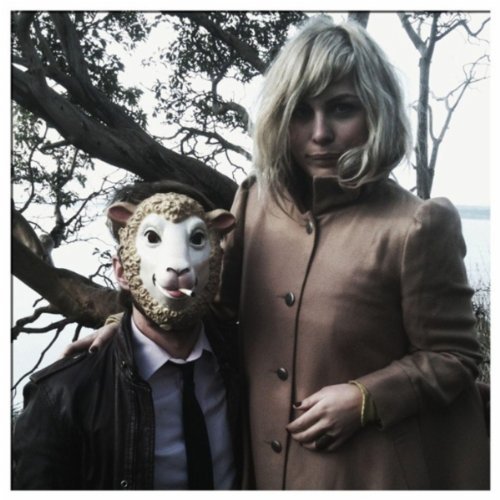
It was bound to happen. What with all of the recent mainstream success of folk-rock acts like Fleet Foxes and Mumford and Sons, it was only a matter of time before other similar sounding groups began to emerge from musical obscurity. Enter Seattle, Washington’s The Head and the Heart, an indie-folk rock band with a pop and country twist.

Originally released independently in 2010, the re-released self-titled LP follows the folk blueprint to a tee. But that’s not to say that it isn’t brimming with quaint, heartfelt tranquility.

In fact, The Head and the Heart’s debut album is actually quite enjoyable. Though it’s not overly challenging, the LP is quirky and endearing.

Buoyed by a simplistic minimalism, the album invokes contrarian themes of loneliness and connection. Sharing vocal duties, Jon Russell and Josiah Johnson communicate an innocence sparked by tenderness but punctuated with fragility. There is unease at the heart of this album, and the LP’s sorrowful nature is consistently at odds with the optimism striving to endure.

“Ghosts” is bouncy and spirited with a Ben Folds Five vibe, while “Down in the Valley” transitions from a weeping, melancholic ballad into an exuberant exploration of hope.

Sadly, the primary drawback of the LP really has nothing to do with the album itself. Instead, it seems to have more to do with folk music’s recent mainstream oversaturation. Jeopardizing originality and talent, this issue always tends to undermine honest intentions by bands like The Head and the Heart in their struggle to achieve success through sheer perseverance.

a94a
Music Reviews,

Arctic Monkeys- Suck It and See

Album: Suck It and See

Label: Domino

Rating: 4/5


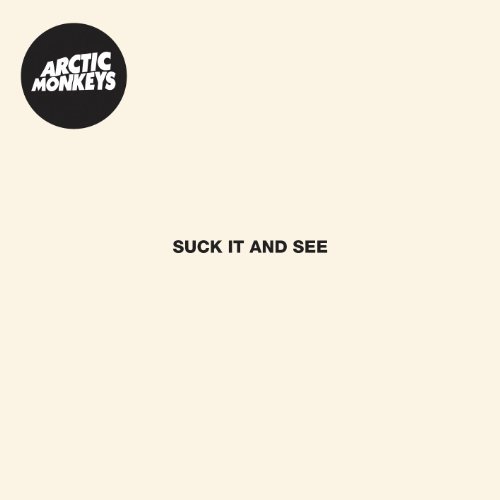
It’s never an easy undertaking to predict the sonic structure of an Arctic Monkey’s album. Their first two LP’s, Whatever People Say I Am, That’s What I’m Not and Favourite Worst Nightmare, were hyper-frenetic garage rock anthems while their third album, Humbug, was largely inspired by producer Josh Homme’s (of Queens of the Stone Age fame) fondness for classic rock with a psychedelic twist. Suck It and See is yet another reinvention that heavily embraces vintage rock of the 1950s and 60s.

In all honesty, it did take a few listens of Suck It and See to fully comprehend the denseness of its body. Seductively ensnaring, the music slowly and methodically glides upon you with mesmerizing serpentine prowess.

“Don’t Sit Down ‘Cause I’ve Moved Your Chair” is dark and foreboding with a dizzying array of dense guitar soundscapes and hypnotically dour bass lines. While “The Hellcat Spangled Shalalala” and “Piledriver Waltz” revel in the unpredictability that has come to define the recent musical landscape of the Monkeys.

Easily one of the most intriguing lyricists in modern music, lead singer Alex Turner incorporates wordplay with an almost Dylan-esque sensibility. Full of bewildering imagery that borders on the fantastical and enigmatic (“Jigsaw women with horror movie shoes/ Be cruel to me cos I’m a fool for you”), Turner’s talent for colorful and playful explorations of vocabulary is at its finest and most puzzling during Suck It and See’s duration.

Though the sound of the Monkey’s continues to deviate from its original blueprint, the thematic structure of the band’s art remains largely consistent with previous releases. From the very first album, Alex Turner has brazenly identified himself as a volatile outsider, and with a Jarvis Cocker sort of swagger, Suck It and See once again delivers a funky romanticism peppered with antagonistic richness.

It’s nothing short of bizarre to witness the continual evolution of the Sheffield, England quartet. With simply four albums, the Arctic Monkeys have adamantly refused generic limitations. While some of their fan base may be diminishing as a result, their artistic diversity continues to expand with notable results.

a95
Music Reviews,

Moby- Destroyed

Album: Destroyed

Label: Little Idiot

Rating: 3.5/5


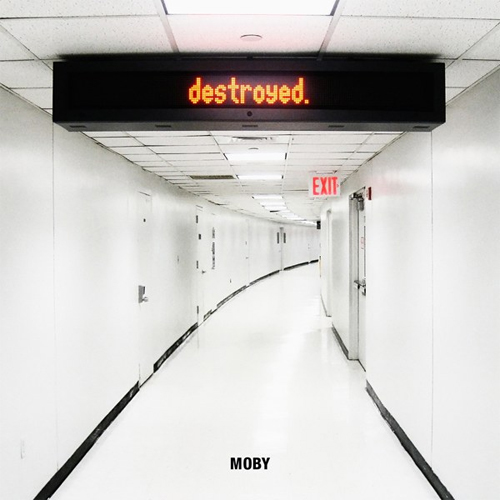
Populated by desolate and dour soundscapes, Moby’s Destroyed eerily captures the essence of emptiness. Basking in haunting structural tones and textures, his tenth LP obsessively consumes itself with the re-creation of the fantastical elements of sleep deprivation. In fact, the electronica mastermind defines his latest release as “a soundtrack for empty cities at 2 a.m.”.

Suffering from bouts of insomnia during the configuration of this album, Moby’s latest release is definitely a curiosity piece; far from perfect, but hardly a write-off.

It should come as no surprise to anyone who has followed his career that Moby prides himself on the seductive manipulation of sound. Embracing a seemingly limitless musical structure, Destroyed expresses a dense abundance of sonic diversity.

Whether it’s the hazy dreamscapes of “The Low Hum”, the Shoegazing-inspired “Lie Down in Darkness”, or the hallucinatory stillness of “Rockets”, Moby invokes a rich and enticing ambience throughout. Even when a few of the tracks border on tedious banality, there always emerges something intriguing hidden amongst the layers of depth.

Destroyed is exactly what you would expect from an insomniac at 2 a.m. (jittery/anxious creativity), and for this reason will more than likely turn people away. It’s definitely experimental, but then again most of Moby’s artistic output tends to be. Suffice to say, it’s intriguing but perhaps it’s too soon to judge if it’s truly memorable.