
ana
Music Reviews,

S.C.E.N.E 2011

Attending the 2011 S.C.E.N.E music festival has opened my eyes to a stark reality-I simply do not fit in with modern day youth culture.

As I scurried amongst the thousands of others in downtown St. Catharines on Sunday afternoon, I was quick to realize that I was the odd man out. Heavily surrounded by a population greatly enamored with tattoos, piercings, mohawks, sideways baseball caps, and skinny jeans, I totally felt out of place with my Noel Gallagher t-shirt and Puma sneakers.

Normally a conservative city, St. Catharines was overrun by a youth movement no longer interested in my membership services.

However, my ostracized self aside, I have to admit that I was extremely impressed with the vibrancy of the downtown core. From the very first moment of my arrival, the city was brimming with an energetic exuberance rarely encountered in an area largely dedicated to retirees.

The most crucial aspect of my day was to be the musical choices I was going to have to make. With over 160 bands performing, it was of the upmost importance that I choose my destinations wisely.

A band I had missed last week in Toronto at NXNE, PKEW PKEW PKEW (gunshots), was playing an early gig at the Merchant Ale House so it was quickly decided that this would be my first stop of the day.

Arriving at the venue early to enjoy a frothy beverage, I happened to stumble upon the final 15 minutes of the Flash Lightnin’ show, and was instantaneously blown away. Mixing knee-buckling guitar solos with pounding, rhythmic drums, I couldn’t help but think that it was a huge mistake to have booked these guys so early in the day.

Not to mention that within mere moments of my festival arrival, I had already made a crucial mistake of missing half of this show. I would have to wise up.

Following the PKEW PKEW PKEW (gunshots) show (bubbly and energetic pop rock), I moved onto Rockford’s House of Rock where Buffalo, NY’s The Bunny The Bear were performing. Specializing in experimental hardcore metal, this show opened my eyes to the sonic diversity present at this year’s festival.

Loud and abrasive growls/vocals by two singers (one wearing a bunny mask, the other wearing a bear mask-get it?), the show’s atmosphere was intense to say the least.

In fact, this type of hardcore musicality appeared to be the theme of this year’s event. No matter what time of the day it was, the city was repeatedly overpowered by the echoing presence of thrashing guitars, booming drums and vocals possessed by hellacious fury. Some of the other bands I happened to catch also embraced this wholeheartedly (Abandon All Ships, Black Lungs, Silverstein, This is Hell).

This angered aggression actually reached a boiling point during the Twitching Tongues (3 p.m.!) performance at The Mansion House. Hailing from Los Angeles, the metal rockers were involved in a brawl during their set that actually navigated its way out of the bar and onto the street-a participant actually had his head bounced off of a parking meter. Apparently beginning as a result of a band member shoving a bouncer, the fight snowballed into an all-out war containing as many as 25-30 people (band members, concert-goers, bouncers and police). When it was all said and done, the bar was shut down for the rest of the day resulting in many of the bands having to reschedule somewhere else (if they could find an open time slot).

It’s interesting to note that one of my earlier concerns was that nothing intriguing would occur throughout the day. I’m relieved that that fear was undermined within the first three hours of the festival.

As the day went on, things began to simmer out and music once again became a priority. Possibly the best show of the day belonged to Die Mannequin, who masterfully controlled the crowd with a set filled with driving and forceful attitude. Closing with Michael Jackson’s “Beat It”, and injecting it with a raw grunginess only helped to further solidify an already stellar appearance.

In an attempt to match this intensity was USS’s headlining performance on the main stage at The Market Square. Mixing elements of electronica and rock, the band consistently offered up one of the most entertaining yet enigmatic performances you will ever witness. Whether they are discussing elements of science, blending up orange juice and drinking it on stage, or covering Outkast’s “Hey Ya” (all performed Sunday night), their shows rarely disappoint.

For me personally, it was a great way to end a day fully devoted to the significance of music.

It’s always a pleasure to check out bands in their unbridled infancy-uninhibited and free from corporate manipulation. Festivals like S.C.E.N.E. and NXNE are perfect platforms to witness a band true to itself. Without compromise, it’s a fresh and invigorating treat time and time again.

Even if I don’t necessarily fit in.

aa99a
Music, Music Reviews,

OFF! Live Concert Review (NXNE Festival)

Date: Friday, June 17, 2011

City: Toronto, Ont.

Venue: Horseshoe Tavern

Rating: 3.5/5


It was a wild night at The Legendary Horseshoe Tavern on Friday. Not only was West Coast Hardcore Punk Supergroup OFF! performing, but someone also lost a shoe. This is no joke, and this latter fact became public knowledge thanks in large part to lead singer Keith Morris’ (of Black Flag and Circle Jerks fame) seemingly unhealthy obsession with returning a shoe thrown onstage during the opening song. The case of the missing shoe lasted the entire 40 minute set but was never solved. It’s safe to say that this was the tamest aspect of the show.

Known for quick 1-2 minute songs, OFF! needed to slow it down a little to fill the 40 minutes, so Morris took to the microphone to air some personal grievances with our North American oppressors-the rich and powerful.  One fan was so angry at the reality that a singer was actually going to talk during a show that he began to agonizingly scream at Morris to shut up and simply play the music. I assumed that he must have been employed by the government.

So every 4 to 5 minutes (3 songs worth), Morris began to speak out. His most controversial moment came when he began to talk about 9/11, and how the death of Osama Bin Laden meant nothing because the American and Canadian governments were currently in the process of training future Bin Laden’s to carry out further terrorist agendas.

Dinner conversation this was not.

But really, what would a punk rock concert be without this sort of anti-establishment sort of behavior? Renowned for pushing life’s most provocative issues to the forefront (and for his dark sarcasm), Morris was ready for a fight (the rest of the band looked bored with his rants). But all the crowd wanted to do was rock, and when OFF! eventually did, the venue became electrified with energy.

Performing quick and pulsating tracks was what people came to see, and when these moments did occur, the concert-goers became moshing fiends. Without hesitation, they would recklessly leap onto the stage only to dive back into the crowd to surf above outstretched hands.

When the band remained focused on the music, the show truly embodied the essence of a punk rock event.  As colorful as Morris’ conversations were, they seemed to detract from the overall energy of the show. But, hey, who really wants an 18 minute gig?

AJ
Film Analysis,

Heath Ledger’s ‘Joker’


Heath Ledger as The Joker


From the moment it appeared on screen, a tantalizing amount of contemplation and anticipation began to mount. It was simply a card but yet it was a statement that resonated deep within millions of avid fans. In most card decks, this is the card that is usually omitted from play, of course, unless it is meant to be wild.


Heath Ledger vs. Jack Nicholson


Batman Begins (2005) ended with an insurmountable bang that shook the foundation of mythic comic book films. When Lieutenant Gordon reveals to Batman the presence of a new and dangerous entity named simply as The Joker, audiences around the world let out a collective gasp of excitement while maintaining a simultaneous sense of uncertainty. You see, many people have grown up with Tim Burton’s 1989 classic Batman, and to them the presence of Jack Nicholson’s Joker is the epitome of what the character is and shall ever be remembered as. So, after the card is revealed during the closing minutes of Batman Begins, one’s initial hesitation to jump for joy was clearly an understood reaction. Nicholson had done such a tremendous job with the character that, in a sense, it would seem blasphemous to ever want to try and confront it again.


When it was announced that Heath Ledger was to take on the role made famous by Nicholson, many eye brows must have ascended in height. The rumored idea that Sean Penn may portray him or even Nicholson himself returning to the role seemed more of an obvious choice then the participation of Heath Ledger. This writer’s first thought was of the Australian’s performance in the 1999 film 10 Things I Hate About You, and how he seemed too innocent and sincere to ever take on a role as challenging and multi-layered as the enigmatic Joker.


However, after initial trailers began to pop up during the end of 2007, this writer knew that the filmmakers had chosen the right thespian for the job. His performance was going to be nothing like the (slightly) campy, over the top buy yet highly entertaining Joker inBurton’s comic book contained Batman. Instead, The Joker seemed to be an unrelenting, manipulative psychopath with no compassion for understanding the simple needs of others. Whereas Burton’s and Joel Schumacher’s Batman films eventually became camp parodies of themselves, Christopher Nolan (the director of Batman Begins and The Dark Knight) took the character of Batman and gave him true origins and meaning. The film was serious in tone, and realism seemed to be a viable commodity sought by the director. In the end, it worked and thus rejuvenated the stale Batman franchise.


Creating a New Joker


The Dark Knight goes to even further lengths to express a sense of realism. Yes it is a comic book film, but yet it strives to rid itself of its comic book origins in order to convey an understanding that this could happen anywhere in present day society.  Thus, in order to maintain a sense of realism, the characters have to appear authentic. Batman is an alter ego to the highly conflicted Bruce Wayne because he finds solace in the form of a creature that frightened him as a child. His motives and intentions are genuine and sincere which thus allows him to be understood as a real human being.


So, there was definitely a challenge for Heath Ledger in taking on this role. He had to be able to embody the over-the-top antics of this troubled individual, but yet make his actions seem sensible enough to seem plausible to discerning audiences. Ledger knew that Nicholson had basically made The Joker his own in 1989, so the character had to become something completely different.


Heath Ledger’s Performance


To sum it up, Ledger does overcome this seemingly insurmountable challenge by truly making the character his own. There is no comparison between his Joker and Nicholson’s. Nicholson’s was memorable but one never felt a true sense of fear when he appeared on screen. When Ledger is on screen, he is magnetic. He steals the film. He is unpredictable but yet compelling. He is amusing but yet frightening. There is such a tremendous amount of diversity conveyed through his acting talent that the character of The Joker can be read in many alternate ways. He is so fully dimensional that to try and define him one way would be a mistake. He is who he is and, as a result, it becomes one of the most memorable screen performances of all time.


It is not simply the way the dialogue is delivered, either. To truly gain a sense of Ledger’s acting capabilities is to watch his mannerisms. The darting, unfocused eyes, the constant licking of the lips, the hypnotic but yet eerie bellow of laughter that resonates from his soul. His tangled and greasy hair defines him as a man unconcerned with appearance, but rather as an individual obsessed with undermining the social structure of balance and superficiality. He is unashamed with who he is because he refuses to allow codes and rules to define him as a human being. He lives to disrupt meaning and to create tension within a structurally obsessed culture.


The Joker has always been one of the most reviled and yet admired characters in fiction. In a sense, The Joker is a contradiction. He finds humor and laughter in the face of death and suffering. He is psychotic but yet Ledger never allows him to simply become read as a one-note psychopath. To create such psychological depths within the mind of a vile entity such as The Joker is a testament to the acting talent of Heath Ledger. Ledger’s performance is larger then life and, as a result, becomes the most memorable interpretation ever of this tragic and sadistic clown.

AR
Pop Culture,

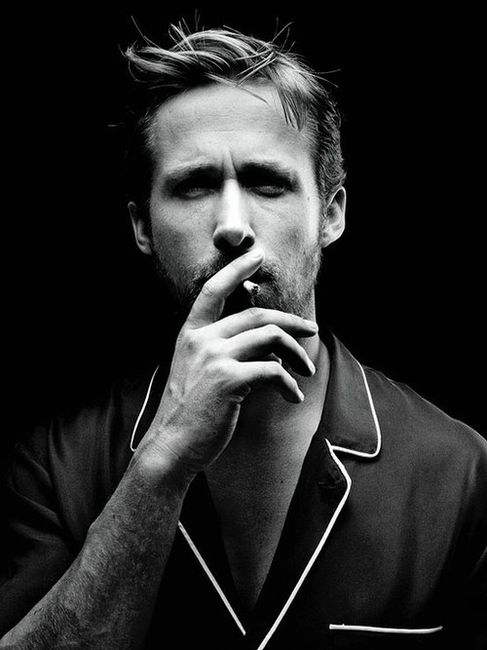
It’s Good To Be Ryan Gosling


Ryan Gosling is an artist who desires respect from his fellow peers. His focus is not on the idea of success in terms of finances but rather, in regards to artistic merit. A man dedicated to his craft, Gosling challenges himself to deliver complex and enigmatic performances in each one of his films. His roles are abstract and the films are low key but yet he manages to deliver astounding performances time and time again.


The Early Days of Gosling


Ryan Gosling was born on November 12, 1980 in London, Ontario, Canada. The second of two children, Gosling grew up in a strict religious family. However, religion was never pushed upon him by his parents and he was left to pursue life uninhibited. As a result, his choices were his and his alone.


However, turmoil was taking its toll within the Gosling household and eventually culminated with his parents divorce. As time progressed, Ryan found himself struggling to fit in at school and thus became involved in numerous fights with fellow classmates. Never one to back down, Gosling would be involved in numerous altercations on the school grounds and eventually was removed from school by his mother (who proceeded to teach him herself). In an interview with the Los Angeles Times, Gosling admitted: “I’d pick on the toughest guys because the girls liked them. So if I beat them up the girls would like me. But it never worked”. This desire to go after what he wanted would certainly be crucial to his role as an actor in Hollywood in the near future.


Gosling got his first break at stardom in 1993 when he beat out thousands of others for the chance to be a show regular on the Mickey Mouse Club. Though his time there was brief, Gosling went on to appear in many Canadian produced television shows such as “Are You Afraid of the Dark” and “Breaker High”. After appearing on an episode of “Hercules: The Legendary Journeys”, Gosling landed the role of young Hercules on the show “Young Hercules” which lasted for two seasons (1998-99).


The Later Days


As Gosling grew in years, his desires began to change. Growing weary of his relegation as a teen actor, Ryan matured greatly when he took on the role of a Jewish man who develops an anti-Semitic world view in the film, “The Believer” (2001). Tense and disturbing (even more so since it was based on a true story), Gosling’s performance was fuelled by a dedication to truly bring life to this unlovable but confused character (Gosling was nominated for numerous awards for his performance).


As time progressed, Gosling would move on to play a scheming and manipulative killer in “Murder by Numbers” (2002) with Sandra Bullock and an apparent child murderer in “The United States of Leland” (2003) with Don Cheadle. However, his breakthrough role came in 2004 when he was cast along Rachel McAdams in the tender love story entitled “The Notebook”. Budgeted at 30 million dollars, the film went on to gross over 80 million and make instant stars out of Gosling and McAdams.


Gosling soon became a sex symbol and even better (forHollywood) became an instant celebrity. However, Gosling refused to sell out to theHollywoodsystem. Consequently, he came to be defined as an actor who showed greater interest in art rather then commerce. This personal creed has continued to fuel his creative decisions.


After his big break, Gosling could have pursued anything but he chose to perform in the mind bending film, “Stay” (2005) with Ewan Mcgregor. Though the film was a box office failure, he still refusedHollywood’s attempt to control his destiny. He was eventually rewarded for his passion when he landed the role of Dan Dunne in “Half Nelson” (2006). Dan, a teacher, vows to help one of his troubled younger students succeed while simultaneously battling his own drug addiction. His performance consequently garnered him an Academy Award nomination and the respect from his peers he so adamantly desired (He became the second youngest male ever to be nominated for Best Actor-Only John Travolta was younger for his role in Saturday Night Fever (1977)).


Granted, Gosling did go on to appear in the Hollywood oozing “Fracture” (2007) with Anthony Hopkins, but his role as an idealistic and cocky district attorney furthered identified his acting range and quickly diminished any belief that he had sold out.


Gosling soon reentered the Independent world with his role as Lars in the film “Lars and the Real Girl” (2007). Gosling plays a lonely and isolated man so detached from society that he begins to date an anatomically correct sex doll. The film may sound awkward and irreverent but it is truly a heartwarming story about hope and acceptance. Gosling portrays this difficult character with warmth and fragility. Lars never becomes the topic of mockery and embarrassment because Gosling refuses to depict the character as an absurd entity. He is merely a socially awkward character who desires to fit in with the world around him.


His Impact on Film


Though Gosling is only 27 years old, he has quickly become a household name. He has been deemed one of the sexiest stars inHollywoodby People magazine and been labeled the next big thing in the film world by some. His desire to grow as an actor outweighs any paycheck. He views acting as an art not a job. As of now, he has yet to take on many film roles for the chance at a hefty payday.


As Johnny Depp and Phillip Seymour Hoffman typically do, Gosling desires to transform himself within the Independent film world. The smaller stories are not concerned with explosions or Computer Generated Imagery (CGI) but rather focus on the idea of characters and their relationships to society. For an actor, this must be the most rewarding aspect of role-playing. To be remembered as an artist, rather then a star.

MPKS-001
Film Reviews,

Max Payne


There are very few words to describe my disappointment after witnessing the debacle that is Max Payne. I had such high anticipation for this film, and yet I have come away so utterly dissatisfied with what was presented to me. How could a film that is based on such an innovative and enjoyable game be so utterly boring and cliché? The previews of the film truly led me to believe that this was finally going to be a video game adaptation that was going to work. Wow, was I ever wrong.


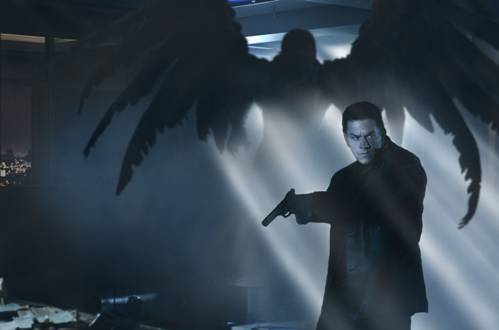
Max Payne is a film based on the 2001 video game of the same name, and follows Max Payne (Mark Wahlberg) as he makes his way through the decadence and seediness of a cold and heartless city in search of the killer who took his wife and child from him. You see, Max has already killed two of the three perpetrators but cannot fully awake from his misery induced silence until he finds the final assassin. He is literally a member of the walking dead because he has yet to fulfill his desire of avenging his family.


Along this dark and disturbed journey, Max crosses paths with many hardened and mysterious characters that have their own set of motivations. One of these individuals is Mona Sax (Mila Kunis), a character so vividly imagined in the video game, but yet is a casualty of a weak performance by Kunis and horrible character development by the screenwriters. Mona Sax is a sexy and vivacious woman but Kunis fails to project the needed ‘oomph’ to truly define her as a strong and independent female. The character comes off more as a screenplay device rather than an essential ingredient for this film.


In all honesty, I loved the video game. It was a highly stylized piece of escapism with wonderful voice over acting, especially by James McCaffrey who voiced Max Payne. McCaffrey delivered a gruff and hardened performance and truly captured the essence of what made Payne tick. Mark Wahlberg, on the other hand, is cold and silent accompanied by an expressionless mug throughout the course of the film. Wahlberg does an adequate job but never truly captures the loneliness and despair needed to define the protagonist of this story. The harsh and unrelenting voice provided by McCaffrey is sorely lacking in Wahlberg’s performance.


One aspect that this film does have going for it however is a wonderful production design. The film is a visual feast for the eyes and truly adds to the idea that this is a cold and unrelenting world without hope or the possibility of redemption.


However, this is the only positive thing that is worth mentioning about Max Payne.To put it simply, I truly believe that the reason why this film is such a major disappointment is because it fails to capture the essence of what made the game so special in the first place. The atmosphere is appropriately dystopian (very Film Noir like), but the story is so predictable and shallow and at times the pacing is very sluggish. Even in scenes meant to be exhilarating, including a number of slow motion sequences trying so desperately to be cool, come off as mere self indulgent fetishes by director John Moore.


A film of this calibre should be pulsating with an energetic exuberance rather than causing the reviewer of this piece to sporadically check his wristwatch to determine when the film may be over.


To be honest, the story is illogical and mind numbingly dumb (characters miraculously appear out of nowhere even though it would be impossible for them to do so). The main culprit of the film, which I will not divulge here, is so obvious from the get go that it makes one wonder how an audience member can figure it all out so quickly but yet Payne remains in the dark about it all. I guess if he did then the film would have been over in the first five minutes….I wish it had been.

AQ
Film Analysis,

A Film By Quentin Tarantino

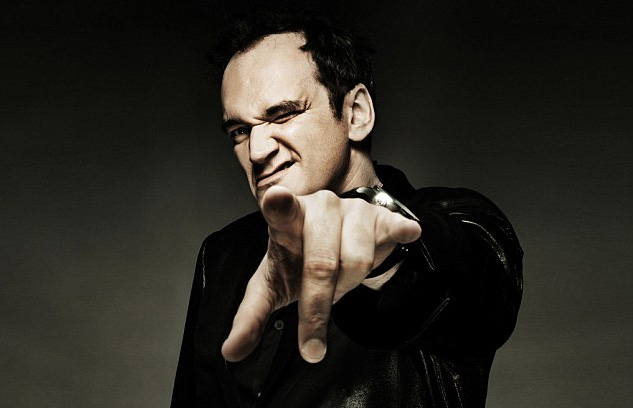
A Quentin Tarantino film is an experience. It is not simply a film or a piece of entertainment but rather an event to be embraced and cherished. Some may call him self-indulgent or even overrated but to fully understand his contribution to the cinematic movement is to fully comprehend his love for the art form. He is not merely a filmmaker but rather an innovative technician who is capable of deconstructing the systematic process that is filmmaking.


The Importance of Character


He is not a filmmaker concerned with action and physical movement. Rather, he is an auteur who fully realizes the importance of character and its development. Characters exist in his filmic environments by acting and reacting to the chaotic situations that they have created for themselves. Violence is not simply in a Tarantino film for its alluring nature but rather as a statement indicating the constrictive situation his characters have found themselves in.


The Importance of Dialogue


What Tarantino may be most renowned for, however, is his focus on highly stylized modes of speech. Greatly influenced by the likes of film noir/pulp fiction writers Dashiell Hammond, Raymond Chandler and Elmore Leonard, Tarantino elicits vivid responses from his audiences by incorporating mundane banter about ubiquitous popular culture subject matters.


Though Tarantino is extremely exuberant about filmmaking; his true passion lies in the dialogue articulated by his characters. To him, the randomness and esoteric manner of the subject matter is indicative of a characters particular personality trait. It may seem like random dialect being spurted from the tongue but, in fact, it is revealing the multiple layers of depth existent within these characters souls.  The fact that they appear to be “regular joes” who discuss and dissect frivolous information allows the audience to better identify themselves with these characters. As they ponder, we, the audience, ponder the absurd nature of their topics.


For instance, in ‘Reservoir Dogs’ (1992), the audience’s initial introduction to the men in black sitting around a table in a diner drinking coffee is accompanied by an in-depth discussion about what Madonna’s song ‘Like A Virgin’ truly means?  This discussion, on the surface, has nothing to do with the film’s subject matter but yet the audience is enthralled by its analysis.


You see, as much as Tarantino is a talented filmmaker, he is an even better writer. The duration of his films are more then likely extended by at least a half an hour because of his admiration for the written word. In fact, it seems, at times, that Tarantino is more interested in finding opportunities for dialogue diversions then in propelling his narrative forward.


In ‘Pulp Fiction’ (1994), two men, Jules and Vincent (Samuel L. Jackson and John Travolta), are seemingly driving to an unknown destination while simultaneously dissecting the enigmatic nature of fast food and its place in European culture. The audience is unaware that these two men are in fact hit men and that they are on their way to perform a job. The randomness of their conversation diverts any feelings of mistrust on behalf of the audience member. Even though they are eventually identified as killers, the audience still feels some sort of kinship with these men. Their personality traits indicate average individuals but yet their professional jobs deem them as dangerous and sinister (outsiders). The audience’s initial interpretation of these two men has now been undermined as was the case in ‘Reservoir Dogs’ when it is found out later that the men discussing the nature of Madonna are, in fact, hardened criminals.


The Hybrid Nature of Tarantino’s Films


Tarantino is a filmmaker immensely soaked in film culture. He is truly a student of film history. He will not only embrace and pay homage to cinematic masterpieces but will also incorporate little known and unheard of films into his repertoire of cinematic infatuation (he will also incorporate many unknown and forgotten actors into his films). There are hints of John Huston’s ‘The Asphalt Jungle’ (1950), Stanley Kubrick’s ‘The Killing’ (1956) and Joseph Sargent’s ‘The Taking of Pelham One Two Three’ (1974) in ‘Reservoir Dogs’ (not to mention many Japanese films-particularly from director Ringo Lam).


‘Kill Bill’ (2003), starring Uma Thurman, incorporates many different forms of Japanese cinema into its story while 2007’s Grindhouse film ‘Death Proof’ is another entry within the Tarantino canon to incorporate his love of horrendous 1970’s cinema. Even his next film, ‘Inglorious Bastards’, a war film set for release in 2009, is said to incorporate many genres including the spaghetti western.


In 1992, ‘Reservoir Dogs’ was released to strong critical acclaim. Two years later, Tarantino delivered his masterpiece ‘Pulp Fiction’ to the world (winner of numerous awards including an Academy Award for Best Screenplay). To sum it up, within a mere sixteen years, Tarantino has changed the landscape of cinema. There have been a countless array of copycats who have attempted to cash in on his influential films but, as of yet, none have been able to fully capture the essence of a Tarantino flick. He is a special filmmaker with extraordinary storytelling capabilities. It is a thrill to witness an event like a QT film.


AAA
Film Reviews,

I Love You, Man Review

Darkness absconds with the clarity of my thoughts. For a moment, there is nothing. There is no sound, no sight, no taste, and no control. I am powerless. Suddenly, there is a flash of an image, but as quickly as it has appeared, it has vanished from sight and I am left to struggle with what I have just witnessed.

You may be wondering why I am beginning a film criticism of a movie in this manner. Well, to be honest, this is the best way to describe my feelings of I Love You, Man

Dreams leave me wanting more. I am taken on a journey, but yet that journey never seems complete when I wake up. There was still more to do. There have been characters who I have met in my nightly visitations with a (distant?) reality that have sparked something within me, but who have then vanished from sight without ever allowing me to truly understand them. There have been moments of clarity and amusement, but they are then contaminated by the images that have baffled me. Then there is the moment when I wake up. The images seem so vivid and alive, and I can recount them without hesitation. But, as the day wears on, I struggle to remember what I have been a part of, and eventually, after a few days, have completely forgotten everything about the experience.

This is a perfect explanation of how I felt after leaving the theatre for I Love You, Man. There were some moments of great enjoyment and amusement, but I was left wanting more afterwards. This film had a tremendous amount of potential going for it, but yet somehow managed to undermine its own intentions.

For all the times that I laughed, there were more times when I felt bewildered and confused. I guess my major discrepancy with the picture was that it was only sporadically funny. To me, it seemed as if the film was more focused on the parts rather than the whole. In other words, it didn’t seem too concerned with telling a great story, but rather it strived to entertain though amusing sequences (which unfortunately, happened too little throughout the films’ running time).

When I pay money to see a film, I am paying to be entertained. The only way I can be entertained is if I am connected to the characters I have invested my time in. I Love You, Man has many characters, but they are not real. They don’t act realistically, and they do not act in a realistic context. They are simply plot devices added to create laughter. By not acting in a normal manner, they are then left to exist in a world of their own merits. They are not in the film to depict a particular reality, but rather are there to entertain us, the viewer. By becoming nothing more than caricatures, they come off as mere exaggerations of an intended reality, which doesn’t sit well with audience members.

Comedy is meant to entertain, and the comedic situations arise out of moments of realism. That is what makes comedy films funny in the first place. By allowing the audience to understand that this could happen, prods them to accept what is about to happen.

I understand that comedy is an exaggerated genre. To provoke laughs, comedy must sometimes go to accelerated lengths. I Love You, Man refuses to take those accelerated risks. Rather, everything about the film comes off as forced-the dialogue, the situations, the acting. The film strives to be funny, but remains situated in a classically structured and predictable plotline. Add to the fact that the pacing of the film is sluggish and certain scenes end awkwardly really tends to disconnect me as a viewer.

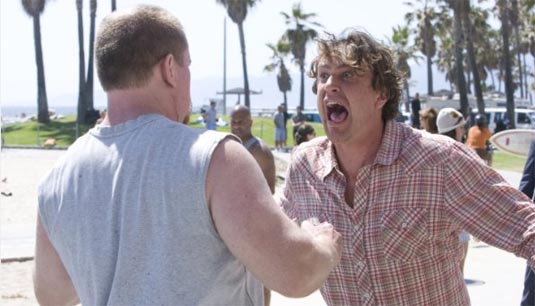
Contrary to what you may be thinking, I did not totally despise the film. Jason Segal as the comedic fall guy and Paul Rudd as the straight man play well off one another. They were great with one another in Forgetting Sarah Marshall and continue their trend here. Though they don’t have much support from the rest of the cast, nor from the script; Andy Samberg, Jon Favreau, Jaime Pressley, and J.K. Simmons are given precious little to do, which all but sabotages what could have been a great comedic ensemble film (I wanted to know more about these people, but they vanished before I was able to comprehend who they truly were).

I Love You, Man is watchable, but just once. I will never watch the film again. It saddens me to say this because I was really looking forward to seeing the film. The audience was great during the show, and my popcorn was even better. It’s too bad the film didn’t live up to my buttery kernels.

It has only been 15 hours since I have seen the film and already the images are vacating the premises of my mind. Just as a dream, the images will soon be gone. I will have quickly forgotten the film in mere hours, and, to be honest, that may not be a negative thing.


a99
Music, Music Reviews,

A Review of ‘Scar Tissue’

Biographies (memoirs) can be a sordid affair. Some become melodramatic and erroneous representations of a particular personality, while others merely become self-indulgent love fests informing the reader about the individual in question’s great accomplishments. How can one judge a particularly important piece of work that is true to itself and pulls no punches in its stories (no matter how negative they may be)?

In 2004, Anthony Kiedis, lead singer of the Red Hot Chili Peppers, released his memoirs to the world. The writer of this article has respected the band’s music but has never been an avid fan of it. It was always entertaining and enjoyable but utterly forgettable afterwards. However, after purchasing and reading the stories that have inspired the music produced by the band, this writer now has a new found respect for the Chili Peppers and its members. It is truly that powerful of a story.


Scar Tissue


It is not easy to expose oneself to the magnifying glass that is the world. To admit to mistakes and understand that one is far from perfect is a courageous and heroic feat to take on. Many are secretive about the choices and challenges that have molded them into who they are today. As a result, they shy away from any negative situation that may result in admitting to the vices that have controlled them as individuals.

Anthony Kiedis understands that even the worst choices in life eventually lead to the formation of who one becomes. Scar Tissue is a raw, frank, candid, unsettling yet uplifting portrait of an individual who has had to struggle his entire life to break free of the ties that bind.

Scar Tissue follows the life of Kiedis, born in Grand Rapids, Michigan, but raised in the land that is Hollywood. From an early age, Anthony becomes introduced to the drug and sex culture that is now an iconic image of Los Angeles. Kiedis (along with co-writer Larry Sloman) graphically depicts how an impressionable young boy becomes corrupted by the influences that surround him. As time marches on, Anthony finds himself further drawn into this world that only desires to rob life of meaning.

Kiedis remains unbiased throughout his stories (even if it negatively portrays him). He explains the feelings and desires that accompany drug use and how euphoric it truly can be. But, as well, he also explains how corrupt and truly wasteful and meaningless this life is. He restrains himself from taking sides and merely expresses how it actually is.

The book truly becomes an inspiring account of how his attempts to overcome his battles eventually begin to negatively affect his role as a musician. In all honesty, it is definitely saddening at times for the reader to learn of the behavior that has controlled him for so many years. As mentioned before, the book does not shy away from details, and it seems that Anthony is perfectly acceptable with providing a play by play of the history of his life (no matter how tragic it may be at times).


The Life of a Red Hot Chili Pepper


The book is well over 400 pages, but it does not feel lengthy in any way. It is an absorbing piece of history to take in and it becomes quite difficult to simply put the book down. One just wants to continue on reading. It focuses on everything possible about his life (which is remarkable that he is able to remember it all) from his drug addiction to his work and problems with the band to the women in his life to the family and friends that support him, even if he may not support himself at all times.

There is something to be said about a man who does not mind becoming intimate with the public. In a celebrity obsessed culture, many may shy away from personal details about ones own trials and tribulations. However, Anthony is candid and personal which truly draws the reader in. Even if one is not a fan of the Chili Peppers brand of music they will still enjoy the read. It is an inspirational book to be shared by everyone. Words are just words and music is just music, but when one discovers the stories behind it all, the words and music take on new meaning, and that is certainly what occurs as a result of this memoir.